

Butter-Poached Lobster Tails have a way of turning an ordinary dinner into something unforgettable. There’s something almost magical about sinking a fork into lobster that’s silky, buttery, and so tender it practically melts in your mouth. If you’ve only ever enjoyed lobster at a fancy seafood restaurant, you’re in for a surprise. This recipe proves you don’t need a professional kitchen to create an elegant meal that’s packed with flavor and surprisingly simple to prepare. The gentle butter-poaching method keeps every bite moist and succulent while letting the natural sweetness of the lobster shine. So grab your favorite saucepan, and let’s bring a little restaurant-quality luxury into your own kitchen. And if you enjoy recipes like this, don’t forget to subscribe to receive new gourmet recipes straight to your inbox.
Butter-Poached Lobster Tails: Everything You Need to Know
What Are Butter-Poached Lobster Tails?
Butter-poached lobster tails are one of those dishes that sound intimidating until you actually make them. Honestly, I used to think this technique was reserved for professional chefs wearing crisp white jackets. Then one evening, I decided to give it a try for a family celebration, and I couldn’t believe how approachable it was. The kitchen filled with the rich aroma of melted butter, fresh garlic, and herbs, and everyone kept wandering in to ask what smelled so good.
Unlike boiling or steaming, butter poaching cooks lobster gently in warm butter rather than rapidly in boiling water. The butter never reaches a rolling boil. Instead, it’s kept at a low temperature, allowing the delicate lobster meat to cook slowly and evenly.
This gentle cooking process helps preserve the lobster’s natural moisture. The meat stays incredibly juicy while absorbing subtle flavors from butter, garlic, herbs, and lemon. Every bite becomes rich without feeling greasy, making this one of the most luxurious seafood dishes you can prepare.
Another advantage is texture. Overcooked lobster can become rubbery in just a minute or two, but butter poaching offers much more control. Because the cooking temperature remains lower, it’s easier to achieve perfectly tender lobster every single time.
Many high-end seafood restaurants rely on this exact technique because it highlights the lobster instead of overpowering it. The butter enhances the sweet flavor rather than masking it, creating a beautifully balanced dish that’s elegant enough for anniversaries, holidays, or romantic dinners.
Have you ever wondered why restaurant lobster tastes so incredibly soft? Chances are, butter poaching is the secret.
Why You’ll Love Butter-Poached Lobster Tails
There are plenty of reasons this recipe deserves a permanent place in your collection.
First, it’s surprisingly easy. While the finished dish looks like something from an upscale seafood restaurant, the actual cooking process takes less than 30 minutes from start to finish.
Another reason is consistency. Because the butter cooks the lobster so gently, you’re much less likely to overcook it compared to grilling or boiling. That’s a huge confidence booster, especially if you’re preparing lobster for the first time.
The flavor is another standout feature. Rich European-style butter, fresh garlic, fragrant thyme, bright lemon, and tender lobster create an incredible combination that feels indulgent without requiring dozens of ingredients.
This recipe is also incredibly versatile. Pair it with creamy mashed potatoes for a comforting meal, serve it over fresh pasta for an elegant seafood dinner, or simply enjoy it alongside roasted vegetables and warm crusty bread. No matter how you serve it, it always feels special.
And here’s the thing—I love recipes that impress guests without keeping me stuck in the kitchen all evening. Butter-poached lobster tails are exactly that kind of meal. Most of the work happens quietly in one pan while you set the table or prepare your side dishes.
Whether you’re celebrating Valentine’s Day, hosting a holiday dinner, planning a birthday meal, or simply treating yourself after a long week, this recipe delivers restaurant-quality results with surprisingly little effort.
Once you experience how buttery, tender, and flavorful homemade butter-poached lobster tails can be, you’ll understand why so many seafood lovers consider this technique the gold standard for cooking lobster.
Ingredients for Butter-Poached Lobster Tails
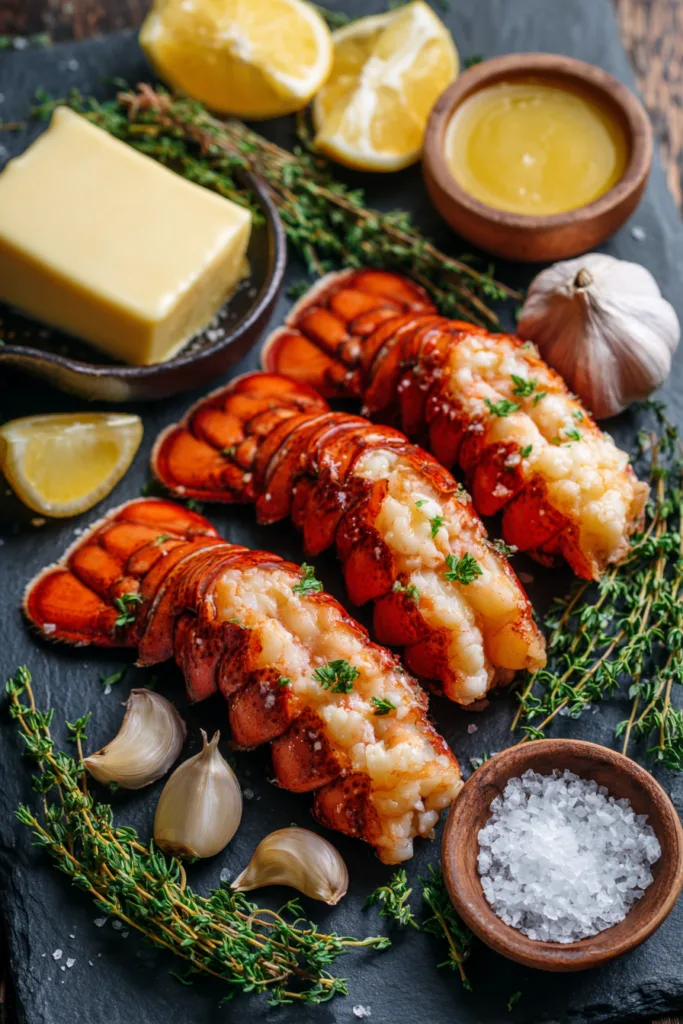
The beauty of Butter-Poached Lobster Tails lies in its simplicity. You don’t need a long shopping list or hard-to-find ingredients. In fact, each ingredient has a specific purpose, and together they create a rich, elegant dish that lets the lobster remain the star of the meal.
One thing I’ve learned over the years is that quality really matters here. Since there are only a handful of ingredients, each one shines through. Fresh herbs, good-quality butter, and sweet lobster tails make all the difference.
Essential Ingredients
The table below lists everything you’ll need for four servings.
| Ingredient | Amount | Purpose |
|---|---|---|
| Lobster tails | 4 (5–6 ounces each) | The main protein with naturally sweet, tender meat |
| Unsalted butter | 2 cups (4 sticks) | Creates the gentle poaching bath |
| Garlic cloves | 4, minced | Adds savory depth without overpowering |
| Fresh thyme | 4 sprigs | Infuses the butter with an earthy aroma |
| Fresh parsley | 2 tablespoons, chopped | Brightens the finished dish |
| Lemon | 1 large | Adds freshness and balances the richness |
| Sea salt | 1 teaspoon | Enhances the natural seafood flavor |
| Freshly ground black pepper | ½ teaspoon | Provides subtle seasoning |
| Lemon zest (optional) | 1 teaspoon | Adds vibrant citrus flavor |
| Chives (optional) | 1 tablespoon | Beautiful garnish with mild onion flavor |
Choosing the Best Lobster Tails
If possible, purchase cold-water lobster tails. They tend to have sweeter, firmer meat than warm-water varieties and produce a more luxurious final dish.
Frozen lobster tails are also an excellent choice. In fact, many seafood markets sell lobster frozen immediately after it’s harvested, locking in freshness. Just be sure to thaw them overnight in the refrigerator before cooking. Avoid thawing them at room temperature, as this can affect both texture and food safety.
When shopping, look for shells without cracks and meat that appears white with slight translucent tones. Avoid lobster tails that have gray spots, strong odors, or excessive ice crystals inside the packaging.
Why Unsalted Butter Works Best
Butter is more than just an ingredient in this recipe—it’s the cooking medium.
Using unsalted butter gives you complete control over the seasoning. Salted butter varies widely between brands, making it harder to balance the flavors. Since the lobster itself has a delicate sweetness, controlling the salt level helps preserve its natural taste.
If you really want to elevate the dish, consider using a high-quality European-style butter. It contains a higher butterfat percentage, resulting in an even silkier poaching liquid and a richer mouthfeel.
Honestly, once you try butter-poached lobster with premium butter, it’s hard to go back.
Ingredient Variations and Substitutions
One of the things I enjoy most about this recipe is how easy it is to customize. While the classic version is nearly perfect, a few simple additions can create entirely new flavor profiles without taking away from the lobster’s natural sweetness.
Herb Variations
Fresh thyme is traditional, but other herbs work beautifully too.
- Tarragon adds a delicate, slightly sweet anise flavor.
- Rosemary creates a more robust, earthy aroma.
- Dill pairs wonderfully with seafood and fresh lemon.
- Fresh basil brings a subtle Mediterranean twist.
- Chives offer a gentle onion flavor that’s perfect as a garnish.
Feel free to combine two herbs for extra depth. My favorite combination is thyme and parsley with a touch of chives sprinkled over the top just before serving.
Flavor Enhancers
If you’d like to add a little personality to the butter, consider stirring in one of these ingredients:
- A pinch of smoked paprika for subtle warmth.
- Crushed red pepper flakes for gentle heat.
- Shallots instead of garlic for a sweeter, milder flavor.
- A teaspoon of Dijon mustard whisked into the butter for extra richness.
- Fresh cracked black pepper for a bolder finish.
These additions complement the lobster without overwhelming it.
Dairy-Free Option
Although butter is the signature ingredient, you can create a dairy-free variation by using a high-quality plant-based butter made specifically for cooking. Choose one with a rich, creamy texture and neutral flavor so it mimics traditional butter as closely as possible.
Citrus Options
Lemon is the classic pairing, but don’t stop there.
Try orange zest for subtle sweetness, lime for a brighter finish, or even a touch of grapefruit zest if you’re looking for something unique. Each citrus fruit adds its own character while keeping the dish fresh and balanced.
How to Make Butter-Poached Lobster Tails
Now comes the fun part—bringing everything together. If you’ve never butter-poached seafood before, don’t worry. The process is much easier than it sounds. The biggest secret is patience. You don’t want the butter to boil; you want it to stay warm enough to gently cook the lobster. That’s what gives Butter-Poached Lobster Tails their signature melt-in-your-mouth texture.
I remember the first time I made this recipe. I kept checking the butter because I thought it wasn’t hot enough. Turns out, that’s exactly how it should be. Low and slow really is the key here.
Step-by-Step Instructions
1. Thaw and Prepare the Lobster Tails
If you’re using frozen lobster tails, thaw them overnight in the refrigerator. Once thawed, rinse them under cold water and pat them completely dry with paper towels.
Using kitchen shears, carefully cut through the top of each shell, stopping just before the tail fin. Gently loosen the meat from the shell while keeping it attached at the end. Lift the meat and rest it on top of the shell for an elegant presentation.
Remove the dark vein if necessary, then lightly season the lobster meat with sea salt and freshly ground black pepper.
2. Prepare the Butter Poaching Liquid
Choose a heavy-bottomed saucepan that’s large enough to hold the lobster tails in a single layer.
Add the unsalted butter and place the pan over very low heat. Allow the butter to melt slowly. It should become completely liquid without bubbling aggressively.
Once melted, stir in:
- Minced garlic
- Fresh thyme sprigs
- Lemon zest
- A squeeze of fresh lemon juice
Let these ingredients infuse the butter for about 3 to 5 minutes. The aroma will become wonderfully fragrant without browning the garlic.
Tip: If the butter starts to sizzle, reduce the heat immediately. The ideal poaching temperature is around 160–180°F (70–82°C).
3. Gently Poach the Lobster
Carefully place the lobster tails into the warm butter.
The meat should be mostly submerged. If needed, use a spoon to baste the tops every minute or so.
Cook for approximately:
| Lobster Tail Size | Cooking Time |
|---|---|
| 4–5 oz | 5–6 minutes |
| 5–6 oz | 6–8 minutes |
| 7–8 oz | 8–10 minutes |
| 8–10 oz | 10–12 minutes |
The lobster is done when:
- The meat turns opaque white.
- The edges become lightly firm.
- The internal temperature reaches 140–145°F (60–63°C).
Avoid cooking beyond this point, as lobster can become tough surprisingly quickly.
4. Rest Before Serving
Remove the lobster tails from the butter and let them rest for about 2 minutes.
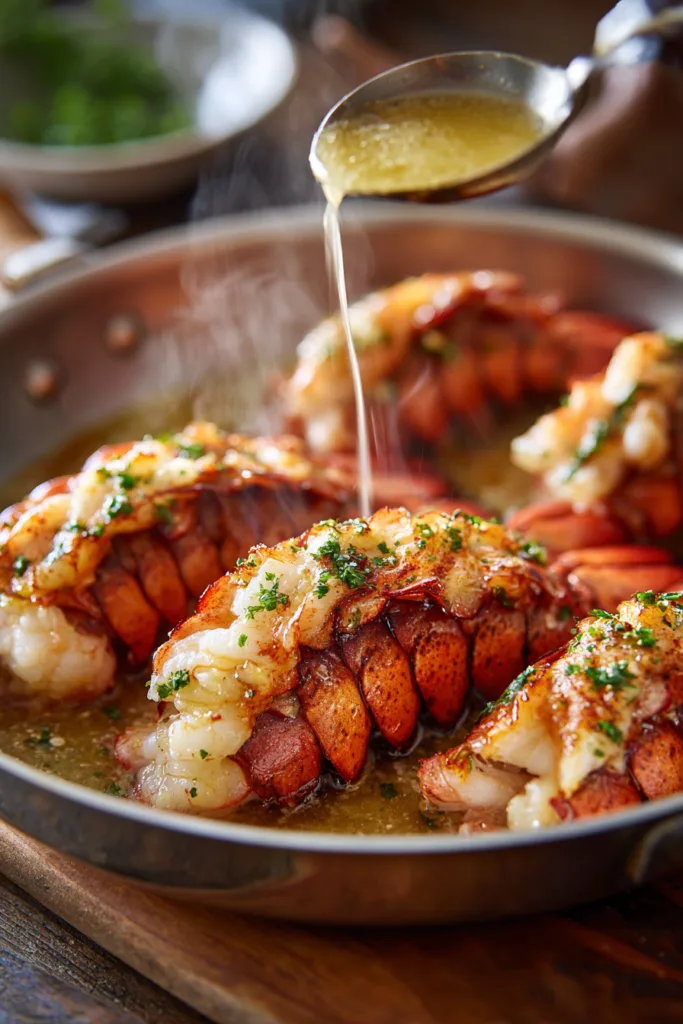
Meanwhile, spoon some of the warm garlic-herb butter over the top.
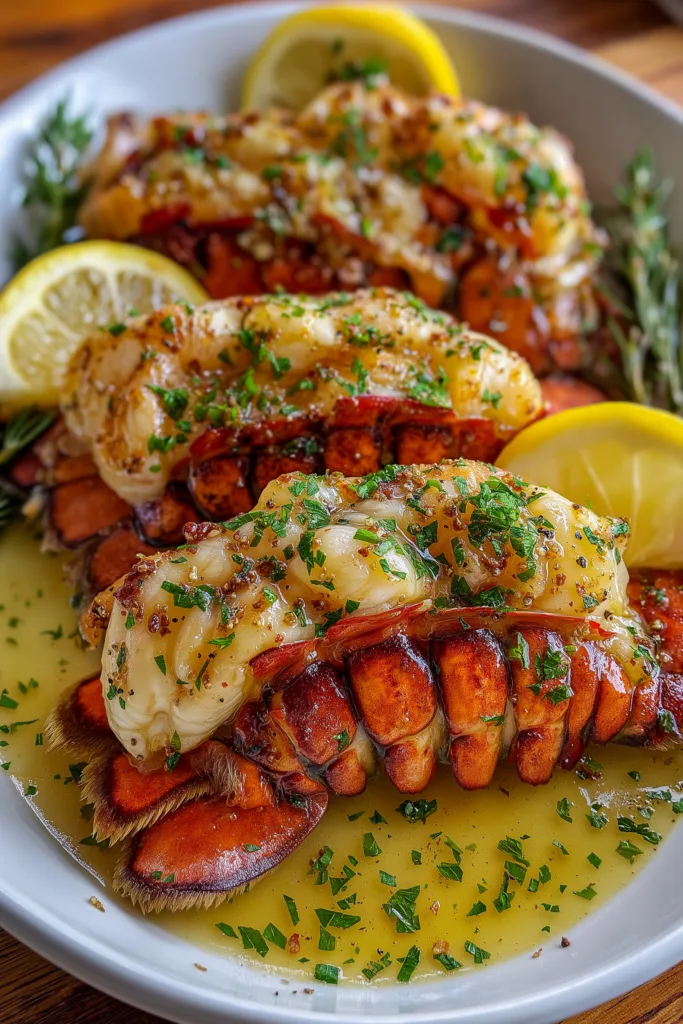
Finish with chopped parsley, extra lemon juice, and a little cracked black pepper.
Honestly, this is the moment when everyone starts gathering around the kitchen. The buttery aroma is impossible to resist.
Serving Ideas for Butter-Poached Lobster Tails
One of my favorite things about Butter-Poached Lobster Tails is how effortlessly they fit into almost any occasion. They can be the centerpiece of an elegant holiday feast, a romantic date-night dinner, or even a weekend meal when you simply want to treat yourself. The rich, buttery lobster pairs beautifully with a wide range of side dishes, so you can keep the meal simple or make it feel like a five-star restaurant experience.
Honestly, I love setting the table with a few fresh lemon wedges and a small bowl of the warm garlic butter for dipping. It’s such a small touch, but it makes everyone feel like they’re dining somewhere special.
Best Side Dishes
Because butter-poached lobster is rich and delicate, the best side dishes complement its flavor without overpowering it. Here are some delicious options to complete your meal.
| Side Dish | Why It Pairs Well |
|---|---|
| Garlic Mashed Potatoes | Creamy and comforting, perfect for soaking up extra butter sauce |
| Roasted Asparagus | Adds freshness and a slight crunch |
| Lemon Herb Rice | Light, fluffy, and citrusy |
| Buttered Green Beans | A simple vegetable that balances the richness |
| Caesar Salad | Crisp lettuce and tangy dressing add contrast |
| Roasted Baby Potatoes | Crispy outside, fluffy inside |
| Grilled Corn on the Cob | Sweet and smoky flavors complement the lobster |
| Artisan Bread | Perfect for dipping into the garlic butter |
If you’re planning a special occasion, consider serving the lobster alongside creamy risotto or homemade pasta. Both absorb the flavorful butter beautifully, ensuring none of that delicious sauce goes to waste.
Perfect Sauces
Although the garlic-herb butter is already packed with flavor, you can offer a few extra sauces on the side for variety.
- Warm clarified butter with fresh lemon
- Creamy lemon aioli
- Herb beurre blanc
- Garlic parmesan cream sauce
- Fresh chimichurri for a vibrant twist
Each sauce adds a different layer of flavor while still allowing the lobster to remain the star of the plate.
Drinks That Pair Beautifully
The richness of butter-poached lobster calls for refreshing beverages.
Some excellent choices include:
- Sparkling water with fresh lemon slices
- Homemade lemonade
- Citrus iced tea
- Chilled cucumber mint water
- Light sparkling apple cider for celebrations
These drinks cleanse the palate and complement the buttery seafood without overwhelming its delicate sweetness.
Expert Tips, Storage, and Reheating
Even though this recipe is straightforward, a few extra tips can help you achieve restaurant-quality results every time.
Expert Tips for Success
Use a thermometer whenever possible.
Keeping the butter between 160°F and 180°F (70°C–82°C) is one of the biggest secrets to perfectly poached lobster.
Don’t rush the cooking process.
Low heat may seem slow, but it’s exactly what keeps the lobster tender and juicy.
Season lightly.
Lobster has a naturally sweet flavor. A little salt, pepper, garlic, and fresh herbs are all you need.
Serve immediately.
Butter-poached lobster is at its absolute best when served fresh from the pan while the butter is still warm and silky.
Save the leftover butter.
Here’s a little kitchen trick I never skip. Strain the leftover butter after cooking and store it in the refrigerator. It’s fantastic for sautéing shrimp, tossing with pasta, brushing over grilled vegetables, or even spreading on toasted bread.
How to Store Leftovers
If you happen to have leftovers—which doesn’t happen often in my house—they store surprisingly well.
Allow the lobster to cool completely before transferring it to an airtight container.
- Refrigerate for up to 2 days.
- Keep a small amount of the butter with the lobster to help maintain moisture.
- Store the remaining butter separately if desired.
Avoid leaving cooked lobster at room temperature for more than two hours.
Can You Freeze It?
Yes, although fresh is always best.
Wrap each lobster tail tightly in plastic wrap, then place it in a freezer-safe container or freezer bag.
Freeze for up to 2 months.
For the best texture, thaw overnight in the refrigerator before reheating.
Best Way to Reheat
The biggest mistake people make is reheating lobster in the microwave for too long. High heat can quickly make the meat tough.
Instead:
- Place the lobster in a small skillet.
- Add a few tablespoons of the reserved garlic butter.
- Warm gently over low heat for about 3 to 5 minutes.
- Spoon the butter over the lobster as it reheats.
This method keeps the meat moist and almost as tender as when it was first cooked.
General Recipe Information
| Recipe Detail | Information |
|---|---|
| Preparation Time | 15 minutes |
| Cooking Time | 10 minutes |
| Total Time | 25 minutes |
| Servings | 4 |
| Difficulty | Easy |
| Cuisine | American Seafood |
| Cooking Method | Butter Poaching |
| Calories | Approximately 420 per serving |
Nutritional Information
The nutritional values below are approximate and may vary depending on the size of the lobster tails and the amount of butter used.
| Nutrient | Per Serving |
|---|---|
| Calories | 420 |
| Protein | 28 g |
| Fat | 33 g |
| Saturated Fat | 20 g |
| Carbohydrates | 2 g |
| Sugar | 0 g |
| Fiber | 0 g |
| Cholesterol | 185 mg |
| Sodium | 540 mg |
| Potassium | 420 mg |
| Vitamin A | 18% DV |
| Vitamin C | 12% DV |
| Calcium | 6% DV |
| Iron | 8% DV |
The combination of lean lobster meat and rich butter creates an indulgent meal that’s high in protein and naturally low in carbohydrates, making it suitable for a variety of eating styles when enjoyed in moderation.
Frequently Asked Questions
When making Butter-Poached Lobster Tails for the first time, it’s completely normal to have a few questions. I know I did. The good news is that once you understand a few basics, this recipe becomes surprisingly straightforward. Below are the questions readers ask most often, along with practical answers to help you achieve perfect results every time.
Can I use frozen lobster tails?
Absolutely. In fact, many of the lobster tails sold at seafood markets and grocery stores are frozen shortly after they’re caught, which helps preserve their freshness.
For the best texture, thaw them overnight in the refrigerator. If you’re short on time, place the sealed lobster tails in a bowl of cold water for about 30 to 45 minutes, changing the water every 15 minutes.
Avoid thawing lobster in hot water or at room temperature, as this can affect both texture and food safety.
How do I know when lobster is fully cooked?
This is probably the most common question, and it’s an important one.
Properly cooked lobster meat should:
- Turn opaque white.
- Feel firm but still tender.
- Reach an internal temperature of 140–145°F (60–63°C).
- Easily separate into juicy, flaky pieces.
If the meat becomes tough, dry, or rubbery, it has likely been overcooked.
What type of butter works best?
Unsalted butter is the best choice because it allows you to control the seasoning.
For an even richer flavor, many home cooks prefer European-style butter, which contains a higher percentage of butterfat. The result is an exceptionally silky poaching liquid that coats the lobster beautifully.
Whichever butter you choose, use real butter rather than margarine or butter substitutes for the best flavor and texture.
Can I make Butter-Poached Lobster Tails ahead of time?
This recipe is best enjoyed immediately after cooking.
However, you can save time by preparing everything in advance:
- Thaw the lobster tails.
- Cut and prepare the shells.
- Mince the garlic.
- Chop the herbs.
- Measure the butter.
When it’s time to eat, simply melt the butter and poach the lobster. Since the cooking process only takes about 10 minutes, it’s easy to serve fresh.
Can I use lobster meat instead of lobster tails?
Yes.
Fresh lobster meat from claws, knuckles, or whole lobsters works wonderfully with this butter-poaching method.
Because smaller pieces cook faster than tails, reduce the cooking time to about 3 to 5 minutes, depending on their size.
The goal is still the same: tender, juicy lobster with a silky texture.
Can I reuse the butter after cooking?
Definitely—and you should!
Once the butter has cooled slightly, strain out the garlic and herbs if desired, then store it in an airtight container in the refrigerator.
The flavored butter is delicious for:
- Tossing with pasta
- Cooking shrimp or scallops
- Drizzling over roasted vegetables
- Brushing onto grilled bread
- Finishing baked potatoes
- Making scrambled eggs even richer
It’s too flavorful to throw away.
What herbs pair best with lobster?
Fresh herbs complement the delicate sweetness of lobster without overpowering it.
Some excellent choices include:
- Thyme
- Parsley
- Chives
- Tarragon
- Dill
- Basil
Fresh herbs are always preferable to dried herbs for this recipe because they infuse the butter with a brighter, cleaner flavor.
Is butter poaching difficult?
Not at all.
Many people assume it’s an advanced cooking technique, but it’s actually one of the gentlest and most forgiving ways to cook lobster.
The only rule is to keep the butter warm—not boiling.
Once you remember that, the rest is surprisingly easy.
Can I prepare this recipe for special occasions?
Absolutely.
Butter-Poached Lobster Tails are ideal for:
- Romantic dinners
- Valentine’s Day
- Anniversary celebrations
- Christmas dinner
- New Year’s Eve
- Birthday meals
- Mother’s Day
- Father’s Day
- Dinner parties
- Holiday entertaining
The presentation is elegant, the cooking time is short, and the results always feel impressive.
Conclusion
There’s something truly special about serving a plate of Butter-Poached Lobster Tails. From the moment the butter begins to melt with fragrant garlic and fresh herbs, the kitchen fills with an aroma that promises an unforgettable meal. And then comes that first bite—sweet, tender lobster coated in silky butter with a hint of bright lemon. It’s rich without being overwhelming, elegant without being complicated.
What I appreciate most about this recipe is how approachable it is. It looks and tastes like something you’d order at an upscale seafood restaurant, yet it’s simple enough to make in your own kitchen with just a handful of quality ingredients. Whether you’re preparing it for a holiday celebration, a romantic dinner, or simply because you’re craving something extraordinary, this recipe delivers every single time.
Don’t be afraid to make it your own. Experiment with fresh herbs, pair it with your favorite side dishes, or serve it over creamy risotto or homemade pasta. Once you’ve mastered the gentle butter-poaching technique, you’ll discover that it’s a wonderful way to cook not only lobster but other seafood as well.
If you enjoyed this recipe, I’d love to hear how it turned out. Leave a review in the comments below and share your favorite serving ideas or cooking tips. Your feedback helps other readers and inspires new recipe ideas for the community.
Print
Butter-Poached Lobster Tails: A Luxurious Seafood Classic Worth Making at Home
- Total Time: 25 mins
- Yield: 4 servings
- Diet: Gluten Free
Description
Tender butter-poached lobster tails gently cooked in rich garlic herb butter with fresh lemon for an elegant, restaurant-quality seafood dinner that’s surprisingly easy to make at home.
Ingredients
4 lobster tails (5–6 oz each)
2 cups unsalted butter
4 garlic cloves, minced
4 sprigs fresh thyme
2 tbsp fresh parsley, chopped
1 large lemon (zest and juice)
1 tsp sea salt
1/2 tsp freshly ground black pepper
1 tbsp fresh chives (optional)
Lemon wedges, for serving
Instructions
1. Thaw lobster tails if frozen, then pat dry and cut the top of each shell with kitchen shears. Lift the meat over the shell.
2. Season the lobster meat lightly with sea salt and black pepper.
3. In a heavy saucepan, melt the butter over very low heat without letting it boil.
4. Add the garlic, thyme, lemon zest, and a squeeze of fresh lemon juice. Let the butter infuse for 3 to 5 minutes.
5. Place the lobster tails into the warm butter and gently poach for 6 to 8 minutes, occasionally spooning butter over the tops.
6. Cook until the lobster is opaque and reaches an internal temperature of 140–145°F (60–63°C).
7. Transfer the lobster tails to serving plates and spoon the garlic herb butter over the top.
8. Garnish with chopped parsley, fresh chives, and lemon wedges before serving.
Notes
Keep the butter between 160–180°F for the best texture and to prevent overcooking.
Use cold-water lobster tails whenever possible for sweeter, firmer meat.
Serve immediately with mashed potatoes, asparagus, crusty bread, or lemon herb rice.
Strain and refrigerate any leftover butter to use with pasta, shrimp, or vegetables.
- Prep Time: 15 mins
- Cook Time: 10 mins
- Category: Dinner
- Method: Butter Poaching
- Cuisine: American