
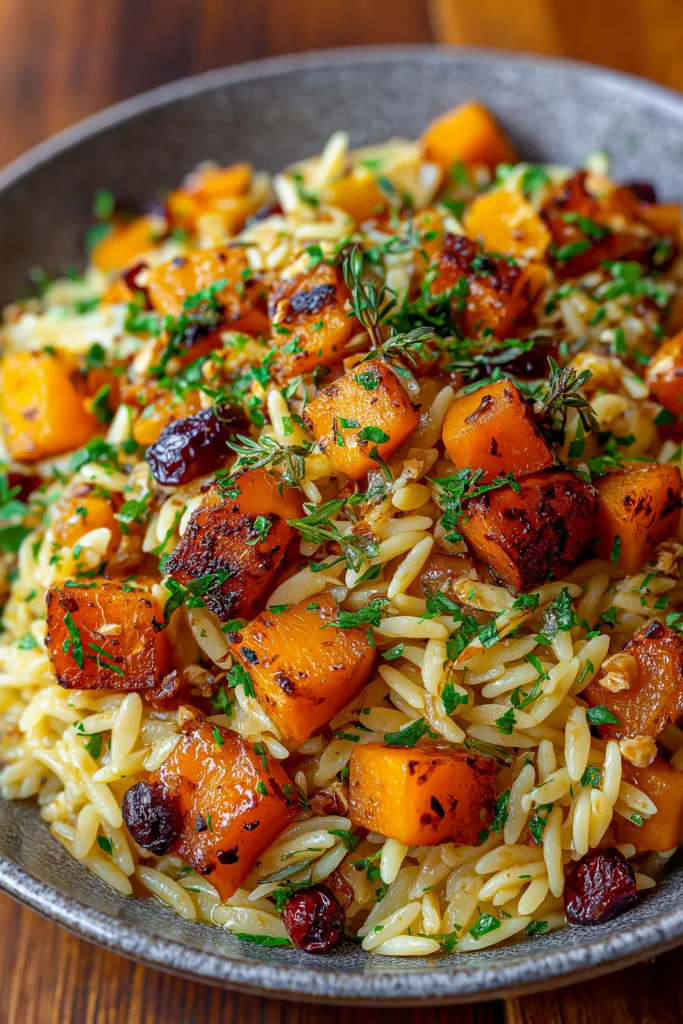
Roasted Butternut Squash Orzo with Maple Glaze is the kind of cozy meal that turns an ordinary dinner into something memorable.
There’s something about roasted butternut squash that instantly makes a kitchen feel warm and inviting. As it caramelizes in the oven, the natural sweetness deepens, creating those irresistible golden edges that everyone secretly reaches for first. Pair that with tender orzo, creamy feta cheese, crunchy toasted pecans, chewy dried cranberries, and a silky maple glaze, and you’ve got a dish that feels elegant without requiring hours in the kitchen.
I first made this recipe on a chilly autumn evening when I wanted something comforting but not too heavy. Honestly, I wasn’t expecting it to become such a favorite. But after one bite, it quickly earned a permanent spot in my seasonal dinner rotation. It’s one of those recipes that tastes like you spent all afternoon cooking, even though most of the work happens while the squash roasts in the oven.
Whether you’re looking for an easy weeknight dinner, a beautiful holiday side dish, or a satisfying vegetarian meal, this Roasted Butternut Squash Orzo with Maple Glaze delivers every single time. Let’s dive in and discover why this recipe deserves a place on your table. And if you love simple seasonal recipes like this one, don’t forget to subscribe to receive new recipes directly in your inbox.
Why You’ll Love This Roasted Butternut Squash Orzo with Maple Glaze
Some recipes simply work, while others surprise you with every forkful. This is definitely one of those recipes.
The first thing you’ll notice is the incredible balance of flavors. Sweet roasted squash meets tangy feta, while toasted pecans add a buttery crunch that contrasts beautifully with the soft, delicate orzo. Then comes the maple glaze—a light dressing that ties every ingredient together with just enough sweetness and brightness.
Another reason this recipe stands out is how incredibly versatile it is.
Serve it as a hearty vegetarian main course for lunch or dinner.
Bring it to Thanksgiving or Christmas as a colorful side dish.
Pair it with grilled chicken, roasted turkey, baked salmon, or pork tenderloin.
Pack leftovers for lunch—they’re just as delicious the next day.
And here’s the thing. Many pasta salads lose their appeal after sitting in the refrigerator overnight. This one actually gets even better as the flavors mingle together.
A Recipe That Celebrates Fall Ingredients
Autumn ingredients have a way of making every meal feel comforting, and butternut squash is one of the season’s biggest stars.
Its naturally creamy texture becomes wonderfully tender after roasting, while the high oven temperature encourages caramelization that intensifies its sweetness. Instead of masking that flavor with heavy sauces, this recipe enhances it using simple pantry staples like maple syrup, Dijon mustard, dried herbs, and olive oil.
Fresh parsley adds brightness at the very end, preventing the finished dish from feeling too rich. Meanwhile, dried cranberries provide little bursts of tart sweetness that keep every bite interesting.
It’s amazing how a handful of everyday ingredients can create something that tastes restaurant-worthy.
The Flavor Profile
If you’ve never combined maple syrup with roasted vegetables before, you’re in for a pleasant surprise.
The maple syrup doesn’t make the dish overly sweet. Instead, it enhances the squash’s natural sugars while balancing the slight tang of Dijon mustard and apple cider vinegar.
Every bite offers multiple layers of flavor.
The orzo is tender and satisfying.
The roasted squash is soft with caramelized edges.
Feta contributes creamy, salty richness.
Pecans provide buttery crunch.
Cranberries introduce chewy sweetness.
Fresh herbs brighten everything.
The maple glaze gently coats each ingredient without making the dish heavy or sticky.
Honestly, it’s one of those combinations that simply makes sense after the very first bite.
Why Roasting Makes All the Difference
Could you steam the squash instead?
Technically, yes.
Would it taste the same?
Not even close.
Roasting transforms butternut squash in ways boiling or steaming simply can’t.
As moisture evaporates in the hot oven, the natural sugars concentrate. The edges develop a beautiful golden color while the centers remain creamy and tender. Those caramelized bits create deep, nutty flavors that become the foundation of the entire recipe.
One mistake I made years ago was overcrowding the baking sheet. Everything steamed instead of roasting, and the squash never developed those gorgeous browned edges.
Now I always spread the cubes into a single layer, giving each piece enough space for hot air to circulate. It seems like a tiny detail, but it completely changes the final result.
Health Benefits of Roasted Butternut Squash Orzo with Maple Glaze
Comfort food doesn’t always have to be heavy, and this recipe proves it beautifully.
Butternut squash is naturally packed with vitamins A and C, fiber, and antioxidants that support immune health and eye health. Its bright orange color is a good reminder of all the nutrients hiding inside each bite.
Olive oil contributes heart-healthy monounsaturated fats while helping your body absorb the fat-soluble vitamins found in the squash.
Pecans offer healthy fats, plant-based protein, and minerals like magnesium and zinc.
Meanwhile, feta cheese provides calcium and protein while adding big flavor with only a modest amount.
Even the maple syrup serves a purpose. Using pure maple syrup adds a gentle sweetness that complements the vegetables without requiring large amounts of refined sugar.
The result is a meal that feels indulgent while still offering a balanced combination of carbohydrates, protein, healthy fats, and fiber.
Ingredients You’ll Need
One of my favorite things about this recipe is that every ingredient has an important role. Nothing feels unnecessary, and every addition contributes either flavor, texture, or color.
| Ingredient | Purpose in the Recipe |
|---|---|
| Orzo pasta | Creates a tender, satisfying base |
| Butternut squash | Adds sweetness and creamy texture |
| Olive oil | Helps the squash roast beautifully |
| Pure maple syrup | Enhances caramelization and sweetness |
| Dijon mustard | Balances the sweetness with subtle tang |
| Thyme and sage | Bring warm, earthy fall flavors |
| Garlic powder | Adds savory depth |
| Salt and black pepper | Season every layer |
| Feta cheese | Provides creamy, salty richness |
| Toasted pecans | Add buttery crunch |
| Dried cranberries | Offer tart bursts of sweetness |
| Fresh parsley | Brightens the finished dish |
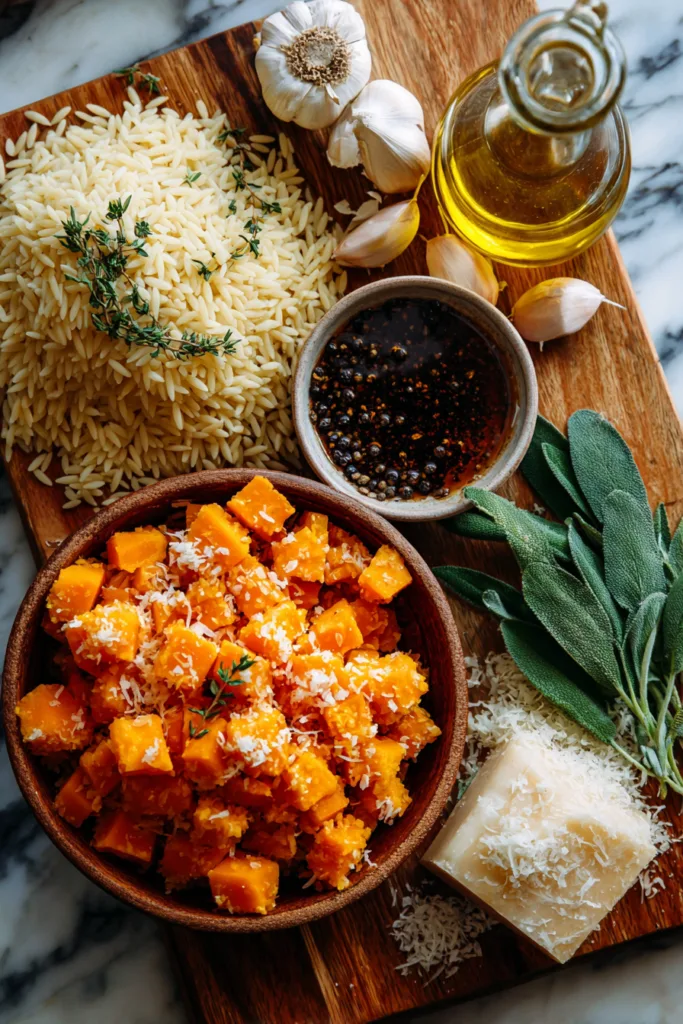
The ingredient list may look simple, but together they create layers of flavor that taste surprisingly sophisticated.
Choosing the Best Butternut Squash
Picking the right squash can make a noticeable difference.
Look for one that feels heavy for its size with firm, matte beige skin. Avoid squash with soft spots, deep cuts, or shiny skin, which can indicate it was harvested too early.
A smaller squash often has fewer seeds and slightly sweeter flesh, making it ideal for roasting.
If you’re short on time, many grocery stores now sell pre-cut butternut squash cubes. They’re a fantastic shortcut, especially on busy weeknights. Just make sure the cubes are roughly the same size so they roast evenly.
And yes, I’ve used both fresh-cut and store-bought cubes many times. On hectic evenings, convenience wins, and the recipe still turns out wonderfully.
Kitchen Tools You’ll Need
The beauty of this recipe is that it doesn’t require any fancy equipment. If you enjoy simple recipes with minimal cleanup, you’ll appreciate this one.
Here’s everything you’ll need:
| Tool | Why It’s Needed |
|---|---|
| Large baking sheet | For roasting the squash evenly |
| Parchment paper | Prevents sticking and makes cleanup easy |
| Large mixing bowl | To coat the squash with seasonings |
| Large pot | For cooking the orzo |
| Colander | To drain the pasta |
| Small bowl or measuring cup | For whisking the maple glaze |
| Whisk | Helps emulsify the dressing |
| Sharp chef’s knife | For cutting fresh squash safely |
| Cutting board | Food preparation |
| Large serving bowl | For tossing everything together |
That’s it. No special gadgets, no complicated equipment. Just everyday kitchen essentials.
Ingredient Additions and Easy Substitutions
One reason I keep coming back to this recipe is how adaptable it is. Once you’ve made it once, it’s easy to customize based on what’s already in your refrigerator or pantry.
Add More Protein
Want to turn this into a more filling main course? Try adding:
- Grilled chicken breast
- Roasted turkey
- Rotisserie chicken
- Grilled shrimp
- Baked salmon
- Crispy chickpeas
- White beans
- Lentils
Each option blends beautifully with the maple glaze while adding extra protein.
Try Different Cheeses
Feta is my favorite because its salty tang balances the sweetness of the squash. But there are plenty of delicious alternatives.
You can substitute:
- Goat cheese for an extra creamy texture
- Fresh mozzarella pearls
- Shaved Parmesan
- Crumbled blue cheese if you enjoy bold flavors
- Ricotta salata for a lighter salty finish
Each cheese creates a slightly different personality for the dish.
Swap the Nuts
Toasted pecans add rich buttery flavor, but don’t stop there.
Other great choices include:
- Walnuts
- Pistachios
- Almonds
- Hazelnuts
- Pumpkin seeds
- Sunflower seeds for a nut-free version
Toasting the nuts before adding them makes a huge difference. It only takes a few minutes, but the deeper flavor is absolutely worth it.
Add More Vegetables
Here’s where you can really make the recipe your own.
Consider adding:
- Baby spinach
- Kale
- Roasted Brussels sprouts
- Mushrooms
- Caramelized onions
- Roasted carrots
- Broccoli florets
- Roasted cauliflower
Have you ever cleaned out your vegetable drawer by tossing everything into one roasting pan? That’s actually how one of my favorite versions of this recipe happened.
Sometimes the best dinners are the accidental ones.
Make It Vegan
This recipe is incredibly easy to adapt for a plant-based diet.
Simply:
- Replace feta with a dairy-free feta alternative.
- Use maple syrup as written since it’s already vegan.
- Double-check your Dijon mustard ingredients if needed.
- Add roasted chickpeas for extra protein.
The finished dish remains just as satisfying.
Gluten-Free Option
Although traditional orzo contains wheat, several brands now make gluten-free orzo using rice or corn flour.
You could also substitute:
- Quinoa
- Brown rice
- Wild rice
- Gluten-free pasta
- Millet
Each option offers a slightly different texture while still working wonderfully with the roasted vegetables.
Step-by-Step Guide to Making Roasted Butternut Squash Orzo with Maple Glaze
One thing I love about this recipe is that every step builds flavor. Nothing feels rushed, and yet it’s surprisingly easy to put together.
Step 1: Prepare the Oven
Preheat your oven to 425°F (220°C).
High heat is important because it encourages caramelization instead of steaming.
Line a large baking sheet with parchment paper to prevent sticking and make cleanup much easier.
Step 2: Season the Butternut Squash
Place the squash cubes into a large mixing bowl.
Add:
- Olive oil
- Maple syrup
- Dijon mustard
- Dried thyme
- Dried sage
- Garlic powder
- Salt
- Black pepper
Toss thoroughly until every cube is evenly coated.
Don’t rush this part. Every piece should have a light coating so the seasonings roast into the squash rather than remaining in the bowl.
Step 3: Roast Until Beautifully Caramelized
Spread the squash across the prepared baking sheet in a single layer.
This step matters more than most people realize.
If the cubes overlap, they’ll steam instead of roast, and you’ll miss out on those delicious caramelized edges.
Roast for 25 to 30 minutes, flipping the squash halfway through.
By the end, the cubes should be:
- Fork tender
- Deep golden brown
- Slightly crisp around the edges
- Soft and creamy inside
The smell at this point is incredible. Honestly, it’s the kind of aroma that makes everyone wander into the kitchen asking when dinner will be ready.
Step 4: Cook the Orzo
While the squash roasts, bring a large pot of generously salted water to a boil.
Cook the orzo according to the package directions until it’s just al dente.
You want the pasta to remain slightly firm because it’ll continue absorbing some of the maple glaze later.
Drain well, then transfer it to a large serving bowl.
If the pasta sits for several minutes, toss it with a tiny drizzle of olive oil to prevent sticking.
Step 5: Prepare the Maple Glaze
Now for my favorite part.
In a small bowl, whisk together:
- Olive oil
- Pure maple syrup
- Apple cider vinegar
- Dijon mustard
- Salt
- Black pepper
Within a few seconds, the mixture transforms into a silky, glossy dressing.
It isn’t thick like a sauce.
Instead, it’s light enough to coat every ingredient without weighing the dish down.
Taste it before using.
Need a little more brightness?
Add another splash of apple cider vinegar.
Want it sweeter?
A drizzle of maple syrup fixes that instantly.
Recipes should always work for your taste buds, not just mine.
Step 6: Bring Everything Together
Once the squash is perfectly roasted, gently add it to the bowl of warm orzo.
Pour the maple glaze evenly over the top.
Using a large spoon or silicone spatula, fold everything together carefully.
Try not to stir too aggressively.
The roasted squash is wonderfully tender, and you want those beautiful cubes to stay mostly intact rather than turning into mashed squash.
As the warm pasta absorbs the glaze, every bite becomes coated with that sweet and tangy maple dressing.
Next, sprinkle in the crumbled feta cheese, toasted pecans, and dried cranberries.
Fold everything together one final time until the ingredients are evenly distributed.
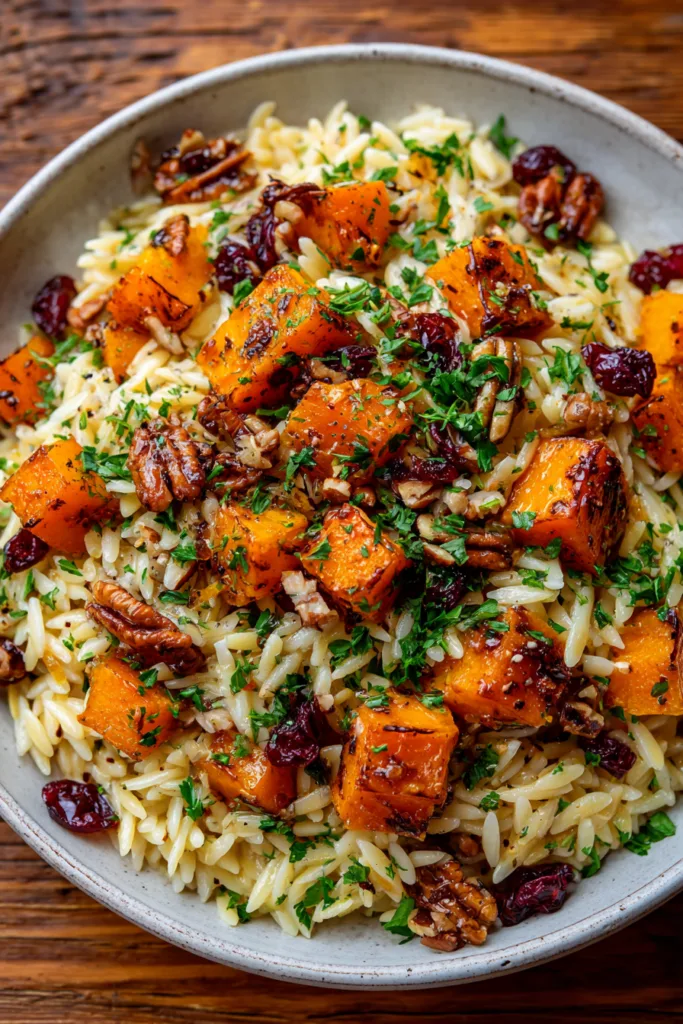
The contrast is beautiful—golden squash, creamy white feta, ruby-red cranberries, toasted brown pecans, and tiny flecks of fresh green parsley waiting for the finishing touch.
This is one of those dishes that looks just as impressive as it tastes. Even before the first bite, you know you’re in for something special.
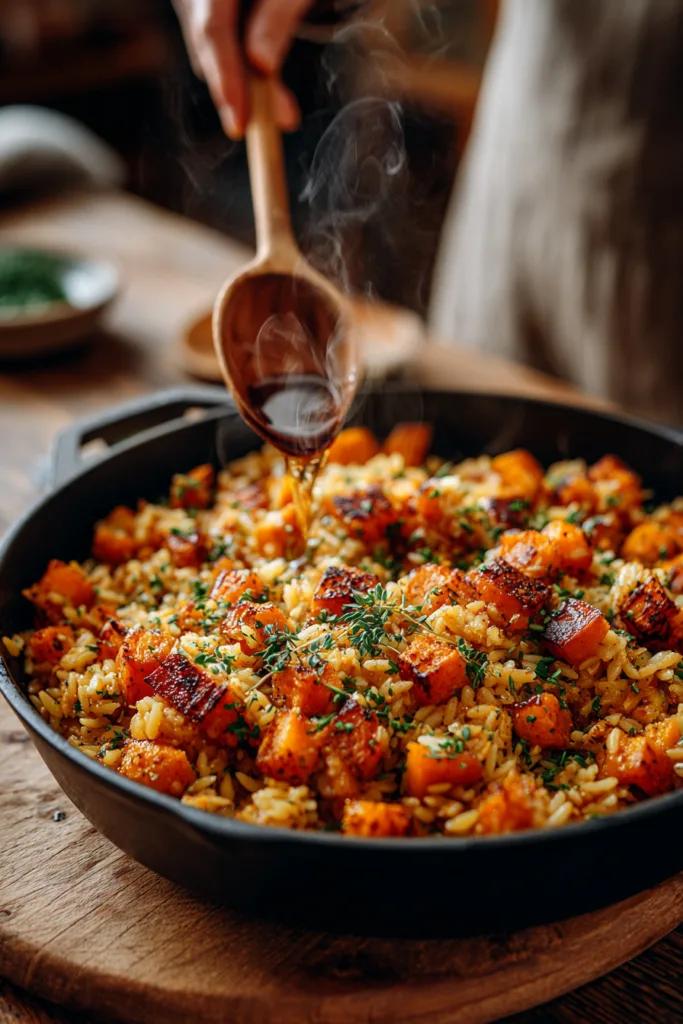
Finish with Fresh Herbs
Just before serving, sprinkle the chopped fresh parsley over the top.
It might seem like a small detail, but fresh herbs completely change the finished dish. They add color, freshness, and a clean flavor that balances the richness of the roasted squash and feta.
If you happen to have fresh thyme or sage on hand, you can add a little of those as well. I usually keep it simple with parsley because it lets the other flavors shine.
Serve the dish warm for the coziest experience, or let it cool slightly and enjoy it at room temperature. Honestly, it’s delicious both ways.
What to Serve with Roasted Butternut Squash Orzo with Maple Glaze
One of the reasons this recipe is always on my fall menu is because it pairs beautifully with so many main dishes. Whether you’re hosting a holiday dinner or just making a weeknight meal feel a little more special, it’s incredibly versatile.
Here’s what I love serving alongside it:
| Main Dish | Why It Works |
|---|---|
| Grilled chicken breast | A lean protein that complements the sweet squash |
| Herb-roasted turkey | Perfect for Thanksgiving or Christmas |
| Garlic butter salmon | Rich and flaky with bright flavors |
| Roasted pork tenderloin | Sweet and savory pairing |
| Lemon roasted chicken | Adds freshness to every bite |
| Steak | A hearty contrast to the creamy orzo |
| Vegetarian stuffed mushrooms | Creates a satisfying meatless meal |
For lighter meals, simply add a crisp green salad with a lemon vinaigrette and some warm crusty bread. That’s dinner sorted.
Tips for the Best Roasted Butternut Squash Orzo with Maple Glaze
After making this recipe more times than I can count, I’ve picked up a few tricks that consistently make it even better.
Cut the Squash Evenly
Aim for 1-inch cubes.
Uniform pieces roast at the same rate, so you won’t end up with some cubes overcooked while others are still firm.
Don’t Crowd the Baking Sheet
This tip deserves repeating because it’s the secret to perfectly roasted vegetables.
Leave a little space between the squash cubes.
Roasting needs airflow. If everything is piled together, the squash releases moisture and steams instead of caramelizing.
Salt the Pasta Water
Your orzo absorbs flavor while it cooks.
Generously salted water seasons the pasta from the inside out, giving the finished dish much more depth.
Toast the Pecans
Never skip this if you have a few extra minutes.
Toast pecans in a dry skillet for about 4 to 5 minutes, stirring often.
The buttery aroma becomes richer, and the crunch is noticeably better.
Add the Feta at the End
Warm pasta softens the cheese slightly, but adding feta too early causes it to melt completely into the dish.
Folding it in just before serving keeps those creamy little pockets intact.
Taste Before Serving
One of the best habits any home cook can develop is tasting before serving.
Sometimes the squash is sweeter than expected.
Sometimes the feta is extra salty.
A quick taste lets you adjust with:
- A pinch of salt
- Fresh black pepper
- Extra apple cider vinegar
- Another drizzle of maple syrup
- Fresh parsley
- A squeeze of lemon juice if you prefer extra brightness
Small adjustments often make the biggest difference.
Storage Instructions
If you’re lucky enough to have leftovers, you’re in for a treat.
The flavors continue developing overnight, making this one of those rare pasta dishes that tastes even better the next day.
Refrigerator
Allow the dish to cool completely before transferring it to an airtight container.
Store in the refrigerator for up to 4 days.
Reheating
Warm individual portions gently in the microwave in 30-second intervals.
Or reheat on the stovetop over medium-low heat with a small splash of water or vegetable broth to loosen the orzo.
Avoid overheating, as the feta can become overly soft.
Can You Freeze It?
Technically, yes.
However, freezing changes the texture of both the orzo and roasted squash.
If you plan to freeze it, I recommend doing so before adding the feta and parsley.
Freeze in airtight containers for up to 2 months.
Thaw overnight in the refrigerator before reheating gently.
General Information
| Recipe Detail | Information |
|---|---|
| Prep Time | 15 minutes |
| Cook Time | 30 minutes |
| Total Time | 45 minutes |
| Servings | 6 |
| Cuisine | American |
| Course | Main Course, Side Dish |
| Difficulty | Easy |
| Calories | Approximately 430 per serving |
This recipe is ideal for:
- Fall dinners
- Thanksgiving
- Christmas gatherings
- Meal prep
- Potlucks
- Vegetarian dinners
- Lunch leftovers
Nutritional Information
Approximate values per serving.
| Nutrient | Amount |
|---|---|
| Calories | 430 |
| Protein | 11 g |
| Carbohydrates | 55 g |
| Fat | 19 g |
| Saturated Fat | 4 g |
| Fiber | 5 g |
| Sugar | 11 g |
| Sodium | 420 mg |
Keep in mind that nutritional values may vary slightly depending on the brands of ingredients you use and any substitutions you make.
Frequently Asked Questions
Can I make Roasted Butternut Squash Orzo with Maple Glaze ahead of time?
Absolutely. In fact, it’s an excellent make-ahead recipe. Prepare it up to one day in advance, refrigerate it, and either serve it chilled, at room temperature, or gently warmed before serving.
Can I use frozen butternut squash?
Yes. There’s no need to thaw it first. Simply roast the frozen squash directly from the freezer, adding about 5 to 10 extra minutes to the cooking time. Spread the cubes out well to encourage browning.
What can I use instead of orzo?
This recipe works well with small pasta shapes like ditalini or pearl couscous. For a gluten-free option, quinoa, brown rice, or gluten-free orzo are all excellent substitutes.
Is this recipe vegetarian?
Yes. As written, it’s completely vegetarian. If you’d like a vegan version, simply replace the feta with your favorite dairy-free alternative.
Can I serve this dish cold?
Definitely. It makes a fantastic pasta salad for picnics, packed lunches, or buffet tables. The flavors become even more pronounced after chilling for a few hours.
Which proteins pair best with this recipe?
Grilled chicken, roasted turkey, baked salmon, pork tenderloin, and even grilled shrimp all pair beautifully with the sweet and savory flavors of the maple-glazed squash.
How long will leftovers last?
Stored properly in an airtight container, leftovers will keep well in the refrigerator for up to four days.
Conclusion
Roasted Butternut Squash Orzo with Maple Glaze proves that simple ingredients can come together to create something truly memorable. Sweet caramelized squash, tender orzo, creamy feta, crunchy toasted pecans, tart cranberries, and a light maple glaze combine to deliver a dish that’s comforting, colorful, and full of flavor.
Whether you’re preparing a cozy weeknight dinner, contributing a side dish to a holiday feast, or planning meals for the week ahead, this recipe fits the occasion beautifully. It’s easy enough for beginner cooks yet impressive enough to serve to guests, making it one you’ll find yourself returning to throughout the fall and winter seasons.
If you enjoyed this recipe, you might also love these seasonal favorites:
- Creamy Pumpkin Orzo with Spinach and Parmesan
- Maple Roasted Brussels Sprouts with Bacon
- Harvest Wild Rice Salad with Apples and Pecans
- Roasted Sweet Potato and Kale Grain Bowl
- Creamy Mushroom Orzo with Garlic and Herbs
I’d love to hear how your Roasted Butternut Squash Orzo with Maple Glaze turned out. Leave a review in the comments below, share any creative variations you tried, and don’t forget to pin your photos on Pinterest to inspire other home cooks. Happy cooking!
Print
Roasted Butternut Squash Orzo with Maple Glaze
- Total Time: 45 mins
- Yield: 6 servings
- Diet: Vegetarian
Description
Tender roasted butternut squash tossed with orzo pasta, creamy feta, toasted pecans, dried cranberries, and a sweet tangy maple glaze. This comforting fall recipe is perfect as a vegetarian main dish or a flavorful holiday side.
Ingredients
12 oz orzo pasta
4 cups butternut squash, peeled and cut into 1-inch cubes
2 tbsp olive oil
2 tbsp pure maple syrup
1 tsp Dijon mustard
1 tsp dried thyme
1 tsp dried sage
1/2 tsp garlic powder
1/2 tsp salt
1/4 tsp black pepper
1/2 cup crumbled feta cheese
1/3 cup toasted pecans, roughly chopped
2 tbsp dried cranberries
2 tbsp fresh parsley, chopped
For the Maple Glaze:
2 tbsp olive oil
1 tbsp pure maple syrup
1 tbsp apple cider vinegar
1 tsp Dijon mustard
1/4 tsp salt
1/4 tsp black pepper
Instructions
1. Preheat the oven to 425°F (220°C) and line a large baking sheet with parchment paper.
2. In a large bowl, toss the butternut squash with olive oil, maple syrup, Dijon mustard, thyme, sage, garlic powder, salt, and black pepper until evenly coated.
3. Spread the squash in a single layer on the prepared baking sheet and roast for 25 to 30 minutes, turning halfway through, until tender and caramelized.
4. Meanwhile, cook the orzo according to the package directions until al dente. Drain and transfer to a large serving bowl.
5. In a small bowl, whisk together the olive oil, maple syrup, apple cider vinegar, Dijon mustard, salt, and black pepper until smooth.
6. Add the roasted squash to the cooked orzo and gently toss with the maple glaze.
7. Fold in the feta cheese, toasted pecans, and dried cranberries.
8. Sprinkle with fresh parsley and serve warm or at room temperature.
Notes
Roast the squash in a single layer to achieve caramelized edges.
Toast the pecans before adding for deeper flavor and extra crunch.
Store leftovers in an airtight container in the refrigerator for up to 4 days.
Delicious served as a vegetarian main course or alongside roasted chicken, turkey, or salmon.
- Prep Time: 15 mins
- Cook Time: 30 mins
- Category: Main Course / Side Dish
- Method: Roasting & Boiling
- Cuisine: American